


– The Koutammakou site, a UNESCO World Heritage Site
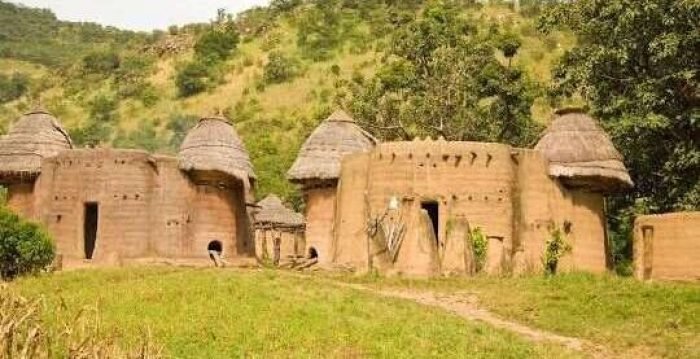
Koutammakou is the name of a large mountainous region located in northeast Togo. Stretching across the border into Benin, the site is home to the Batammariba, whose remarkable earthen turret houses have become a symbol of Togo.
The 50,000-hectare site was listed as a UNESCO World Heritage Site in 2004. In this country, nature is closely associated with the rituals and beliefs of society, with a very particular characteristic. Indeed, the "Takienta," the basic family dwelling in which everything is simultaneously technical, utilitarian, and symbolic, is unique. No other region has such a close interrelation between symbolism, function, and technology. This particular type of dwelling, whose aesthetics rely on spectacular forms, is the result of the creative genius of the Batammariba: "those who shape the earth" or, by extension, "the good masons," according to the translation of some anthropologists.
The cultural landscape owes its remarkable appearance to its Sikien, turreted houses that reflect the social structure. These quasi-spherical buildings have floors topped by granaries with a spherical base. Some buildings have flat roofs, others conical thatched roofs. The houses are grouped into villages that also include ceremonial spaces, springs, rocks, and sites reserved for initiation ceremonies. The Koutammakou is a living cultural landscape representative of the traits of an agricultural society working in harmony with the landscape and where nature underpins beliefs, rituals, and daily life. It is composed of material elements such as sacred rocks, groves, forests, houses, fields, wild and domestic animals, artisanal crafts, songs, dances, traditional sports, etc.